Performer(s)
Luis Pipa - piano
Composer(s)
Luiz Costa
Work(s)
Three pieces: 1. Ao pé da azenha 2. Canção do berço 3. Conto de fadas 4. Fiandeira 2 Poemas do Monte 5. Pelos montes fora 6. Murmúrios das fontes 7. Ecos dos vales 8. Campanários
Ref.: NUM_1099
Mostrar mensagens com a etiqueta Works. Mostrar todas as mensagens
terça-feira, 31 de maio de 2011
Maria José Souza Guedes - Piano
Maria José Souza Guedes
I-Tunes:
Maria José Souza Guedes, was born in Porto, where she completed her piano studies, first with Ernestina da Silva Monteiro and later with Fernanda Wandschneider.
Details:
Performer(s)
Maria José Souza Guedes (piano),
Composer(s)
Cândido Lima / Alfredo Casella / Ludwig van Beethoven / César Franck
Work(s)
Toccata + Scherzando + Ostinato (Lima) / Toccata (Casella) / Sonata Op. 32 nº 2 - “Tempestade” (Beethoven) / Prelude, Choral and Fugue (Franck)
Ref.: NUM_1081
José Augusto Pereira de Sousa - Violoncelo/ Álvaro Teixeira Lopes - piano
J. Guerra Vicente - M. Falla
R. Schumann - F. Schubert
Performer(s)
José Augusto Pereira de Sousa (violoncello)
Álvaro Teixeira Lopes (piano)
Composer(s)
José Guerra Vicente (1907 - 1976) / Manuel de Falla (1876 - 1946) / Robert Schumann (1810 - 1828) / Franz Schubert (1797 - 1828)
Work(s)
Cenas Cariocas (Vicente) / Suite Populaire Espagnole (de Falla) / Adagio and Allegro Op. 70 (Schumann) / Sonata in A Minor D 821 (Arpeggione) (Schubert)
Ref.: NUM_1067
Etiquetas:
Álvaro Teixeira Lopes,
Composers,
Franz Schubert,
José Augusto Pereira de Sousa,
José Guerra Vicente,
Manuel de Falla,
Performers,
Piano,
Robert Schumann,
violoncello,
Works
segunda-feira, 30 de maio de 2011
Felix Mendelssohn Bartholdy
Rubén Lorenzo / Carlos Damas
I-Tunes:
Carlos Damas was born in Coimbra on April 8, 1972. He began his musical studies at the School of Music of Linda-a-Velha, under the orientation of professors Vasco Brôco, Alexandra Mendes and Leonor Prado.
Details:
Performer(s)
Rubén Lorenzo (piano) / Carlos Damas (violin)
Composer(s)
Felix Mendelssohn Bartholdy (1809 - 1847)
Work(s)
Sonata for Violin and Piano in F Minor, Op. 4 / Sonata for Violin and Piano in F Major
Ref.: NUM_1044
Duo Piano Flauta - Franz Schubert / César Franck / Francis Poulenc
Duo piano / flauta (piano / flute), founded in 1996, is built upon the solid individual experience of each of its members, which has been constructed through a long course of apprenticeship with notable personalities in the musical world.
Details:
Performer(s)
Luis Meireles (flute) / Maria José Souza Guedes (piano)
Composer(s)
Franz Schubert (1798 - 1829) / César Franck (1822 - 1890) / Francis Poulenc (1899 - 1963)
Work(s)
Variationen Op. 160 - D 802 (Schubert) / Sonata in A (Franck) / Sonata for Flute and Piano (Poulenc)
Ref.: NUM_1079
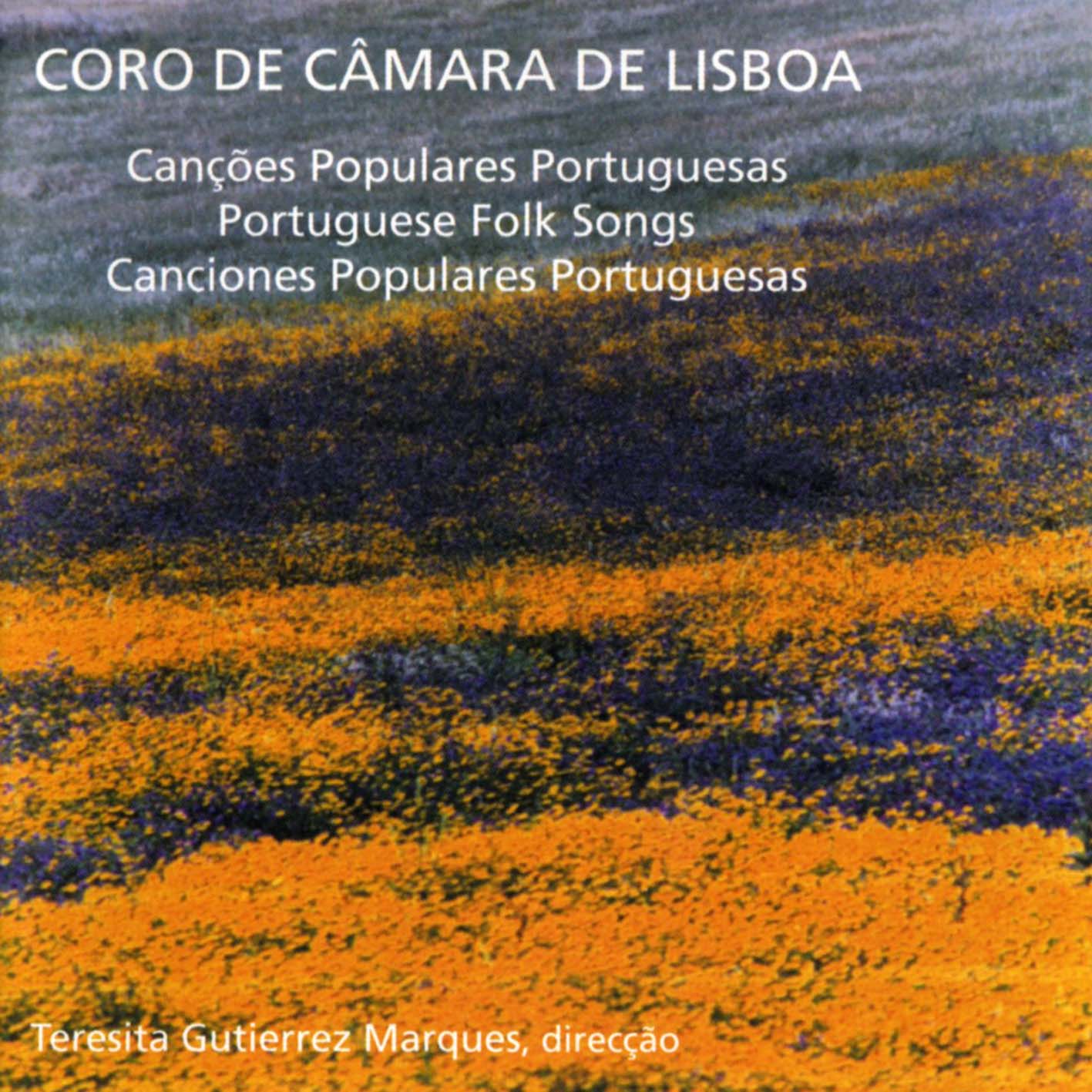
Coro de Câmara de Lisboa
Portuguese Popular Songs
The Chamber Choir of Lisboa was formed in 1978 by Teresita Gutierrez Marques and is constituted by twenty young musicians. The choir continues to maintain intense activity – at a level of quality that has earned it unanimous public applause.
Details:
Performer(s)
Chamber Choir of Lisboa / (choral direction: Teresita Gutierrez Marques) / Sopranos: Jael Martins, Lucina Silva, Mafalda Nascimento, Matilde de Castro, Susana de Oliveira, Teresa Cordeiro.Contraltos: Ana Ferro, Isabel Torres, Luzia Rocha, Marta Gregório
Composer(s)
Eurico Carrapatoso / Paulo Maria Rodrigues / Jacques Chailley / Padre Manuel Faria / Regina Aires / Mário de Sampayo Ribeiro / Filipe Pires / Fernando Lopes Graça
Work(s)
Trai-trai / Chapéu preto / Ó limão, verde limão / Era ainda pequenina / Os homens que vão prá guerra / Canção da vindima / São horas de emalar as troixas / O milho da nossa terra / Fui-te ver, \'stavas lavando / Olhos azuis são ciúmes / Os amores d\' àzêton
Ref.: NUM_1073
Maria do Céu Camposinhos - Piano
Maria do Céu Camposinhos
I-Tunes:
Maria do Céu Camposinhos was born in Mozambique in 1970. She began her musical studies at the age of five, and continued at the Calouste Gulbenkian School of Music in Braga in the class of Professor Luís Filipe de Sá.
Details:
Performer(s)
Maria do Céu Camposinhos (piano)
Composer(s)
Ernesto Lecuona / Alexander Scriabin / Álvaro Leon Cassuto / Robert Schumann
Work(s)
Afro-Cuban Dances (Lecuona) / Rèverie (Scriabin) / Poemas Op. 69 (Scriabin) / Sonatina (Cassuto) / Carnaval Op. 9 (Scènes Mignonnes sur quatre notes) (Schumann)
Ref.: NUM_1070
Etiquetas:
Alexander Scriabin,
Álvaro Leon Cassuto,
Composers,
Ernesto Lecuona,
Maria do Céu Camposinhos,
Numérica,
Performers,
Piano,
Portugal,
Robert Schumann,
Works
Depois de Tordesilhas... (After Tordesilhas…)
I-Tunes:
"… in a program chosen with a preoccupation for quality, that it should serve as an example to those dedicated to the recreation of music.”
Details:
Performer(s)
Elizabete Matos (soprano) / Elsa Saque (soprano) / Helena Afonso (soprano) / Nuno Vieira De Almeida (piano)
Composer(s)
José Francisco Leal / Francisco Lacerda / Luís de Freitas Branco / Emesto HalfRer / Enrique Granados / Xavier Montsalvatge / Heitor Villa Lobos / Babi de Oliveira / Alberto E. Ginastera
Work(s)
Deus Salve a Pedro (Leal) / A Alegria dos Meus Olhos (Lacerda) / Tenho Tantas Saudades (Lacerda) / Não Morreu Nem Acabou (Lacerda) / 3 Sonetos de Antero de Quental - A Sulamita - Idílio - Sonho Oriental (Freitas Branco) / Fado (Halffter) / Oh! Muerte Crue
Ref.: NUM_1030
Orgãos da Sé Catedral de Braga
Organs from the Cathedral of Braga
Organs: “Organ of the Gospel side / Organ of the Epistle side... a masterly work, precious for the lovers of sacred music.”
Details:
Performer(s)
Gerhard Doderer (organ)
Composer(s)
Pedro de Araújo (+ after 1705) / Carlos Seixas (1704 - 1742)
Work(s)
Pedro de Araújo: “Consonâncias” on the 1º tone / Piece on the 6º tone / Piece on the 1º tone, to the Salve Regina / Middle Register piece on the 2º tone, with two trebles / Phantasia on the 4º tone / Batalha de 6º tom Carlos Seixas: Sonata XII in A Minor / Sonata IV in C Minor / Sonata XXX in A Minor / Sonata XVI in C Minor / Sonata XIX in A Minor / Sonata XV in B Minor / Sonata 48 in G Major
Ref.: NUM_1028
Opus Ensemble - Opus Ensemble 94
Unanimously praised by specialist critics, the OPUS ENSEMBLE is considered one of the most important groups to have emerged from the Portuguese musical panorama in recent years. With its unusual instrumental formation (oboe, viola, piano and contrabass), the group offers highly diversified stylistic possibilities and cultivates a wide repertory spanning different epochs and types of musical thought, from the 17th-Century to our time. The performers who constitute the OPUS ENSEMBLE are well-known artists within Portugal as well as musicians possessing brilliant curricula at an international level. From their first public appearance in 1980 (at the International Festival of Music in Estoril, Portugal), composers from various esthetic and geographic domains have dedicated works to the OPUS ENSEMBLE, namely: Fernando Lopes Graça, Joly Braga Santos, Fernando Corrêa de Oliveira, Constança Capdeville, João Pedro Oliveira, Jorge Peixinho, António Pinho Vargas and António Victorino d\'Almeida (Portugal); Ramón Barce and José Luis Turina (Spain); Gerardo Gandini, Celina Kohan, Alejandro Erlich Oliva, Gustavo Beytelmann and Astor Piazzolla (Argentina); Maurice Ohana, Edith Canat de Chizy (France); Guido Donati (Italy); Vasco Martins (Cabo Verde) and Eugueny Zudilkin (Russia). The group’s discography includes the following editions: OPUS ENSEMBLE, OPUS ENSEMBLE VOL. II, TEMAS DO CANCIONEIRO PORTUGUÊS AO ESTILO DO OPUS ENSEMBLE (Songs from the Portuguese Songbook in the style of the Opus Ensemble) and OPUS ENSEMBLE VOL. III (on the label “His Master\'s Voice”); VASCO MARTINS (published by the author); CONSTANÇA CAPDEVILLE (SEC edition - Discoteca Básica Nacional [National Recording Library]). The recording and artistic activity of the OPUS ENSEMBLE his received the following awards: the Critic’s Prize (1982 & 1984); the Golden Seven (1983); the Nova Gente Trophy (1983, 1986 &1987); Rádio Renascença’s Great Disc Prize (1988). In 1989, the OPUS ENSEMBLE was nominated as an official member of the Portuguese Counsel of Music for UNESCO.
Beyond their presence in the most important concert halls and music festivals in Portugal, the group’s growing international activity has included numerous appearances in Paris, London, Warsaw, Krakow, Madrid, Huelva, New York, Boston, Washington, Newport (R.I.), Tokyo, Macau, Beijing, Buenos Aires, Montevideu, Rio de Janeiro, Cabo Verde, Osaka and Seoul. The have recorded for RDP, RTP (Lisbon, Porto, Azores), Radio France (Paris), TDM (Macau) and Spanish National Radio (Madrid). One permanent parameter in the artistic profile of the OPUS ENSEMBLE is the systematic inclusion of works by Portuguese composers in the programming of all of their concerts. In this way, they offer an invaluable contribution to the dissemination of Portuguese culture throughout the world.
Details:
Performer(s)
Opus Ensemble: Ana Bela Chaves (viola) / Olga Prats (piano) / Bruno Pizzamiglio (oboe) / Alejandro Erlich-Oliva (contrabass)
Composer(s)
António Victorino de Almeida / Erik Satie / Maurice Ohana / Ludwig Van Beethoven / Leopold Mozart
Work(s)
Três andamentos a procura de um quarteto / La belle excentrique / Kypris / Duo in C Major for viola and contrabass / Sonata in G major
Ref.: NUM_1015
quarta-feira, 11 de maio de 2011
António Victorino D'Almeida - DINIS E ISABEL AND OTHER CHAMBER WORKS
Dinis e Isabel, op. 89
1 Parte I 07’48’’
2 Parte II 04’29’’
3 Parte III 02’06’’
4 Parte IV 05’20’’
Ana Ferraz (soprano)
José João Gomes dos Santos (piano)
António Costa (trompa)
Ravelle Chapuis (flauta)
Carmen Cardeal (harpa)
5 Decateto Nº 1, op. 138 08’17’’
Orquestra Utópica - direcção Nuno Corte-Real
6 Decateto Nº 2, op. 155 11’41’’
Orquestra Utópica - direcção Nuno Corte-Real
7 Memória, op. 95 03’36’’
José João Gomes dos Santos (piano)
Ravelle Chapuis (flauta)
António Costa (trompa)
8 O Pássaro que salvou o mundo, op. 137 14’03’’
Janete Santos (flauta)
Ana Pereira (violino)
Joana Cipriano (viola)
Carolina Matos (violoncelo)
9 In Memoriam, op. 105 09’02’’
Quinteto de Metais LX Brass:
Sérgio Pacheco (trompete)
Daniel Louro (trompete)
Nuno Cunha (trompa)
Rui Fernandes (trombone)
Adélio Carneiro (tuba)
10 Tocata, op. 133 01’50’’
Ingeborg Baldaszti (piano)
Ricardo Rocha (guitarra)
Details:
DINIS E ISABEL
and other Chamber Works
In general – but with a sufficient number of worthy and honorable exceptions, which are, in many cases, enough to annul this negative observation – I am seldom enthused to hear singing, as I find myself far from considering, as some affirm, that the human voice is the most beautiful of instruments.
On the contrary, I must confess that much vocal music even manages to actually bother me, for example, the use of voice can render melodies that would be perfectly acceptable, if played on other instruments, completely unbearable.
However, I insist in the value of the exceptions, and wish to clarify that the voices which fascinate me might come from a Beniamino Gigli, Plácido Domingo, Luciano Pavarotti or a Maria Callas, Franck Sinatra, Carlos do Carmo, Amália Rodrigues, Edith Piaf or an Ellis Regina, among many other exemplary cases.
And so, overcome by a sense of wonder and true enchantment, I employed the voice-without-words of Ana Ferrraz in “Dinis e Isabel,” considering that, in this instance, I was before a truly perfect instrument!
Neither can I ignore that the art of singing is connected, and very much so, to verbal articulation, which gains special relief in those wonderful singer/songwriters like a Brel, or a Brassens – who are even said to have “weak” voices… - or in the true marvel that results from just any Lied sung by Fischer-Dieskau!
This relation between sound and word may become truly beguiling. One of its greatest proponents is found in an amazing composer, Giacomo Puccini – so much so, that it would be difficult for me to imagine him without access to the human voice, irrespective of the prodigious quality of his orchestration!
And so, I will not transform a problem of sensibility, one that is perhaps shared only by me, into a theory, much less a rule, given that the world of exceptions is so truly vast that I would easily fall into difficult and constant contradictions.
This is how I feel, and I will not hide this reality, even though it might keep me within the bounds of the “artistically correct.” Therefore, I wish to convey quite openly that in my interpretation of that most beautiful text by António Patrício in “Dinis e Isabel” (I had already done something similar with “Dom João e a Máscara,” in fact) is exclusively instrumental, so that the admirable timbre - allied with superb musicality – of Ana Ferraz, functions in equal measure with the role of the horn, piano, flute and harp, instruments which, in this case, also benefit from musicians of noteworthy quality.
I was invited to write a Decateto (no. 1) to be performed in Porto and I immediately accepted the proposal, since, in addition to my own fascination for chamber music, the relatively large number of available instruments would permit me to establish relationships and sonorous effects similar to those possible in more symphonic situations.
It so happens that I was wrong – I did not understand the commission arranged over the telephone…- and I wrote the piece for an instrumental formation that was nearly the opposite, in timbral terms, of the one asked of me.
With only one week until the beginning of rehearsals, I had no alternative but to write, this time with the instruments initially requested, the Decateto no. 2 (which should have been the first one…) in a very short period of time, but I enjoyed resolving this “mistake,” especially since I consider that the two works complement each other in several manners.
“Memória” is a small piece dedicated precisely to the memory of someone already disappeared – known as Odette de Saint-Maurice – who produced a body of literature perhaps legitimately related with the so-called “romance cor-de-rosa” (overly simplistic, hyper-romantic novels), although this classification never offended the author. She was more preoccupied with writing Portuguese well, which she always succeeded in doing, despite her great number of books - books that have undeniably marked at least two generations of Portuguese youth.
Many have asked me about the meaning of my piece entitled “O Pássaro que salvou o mundo,” (“The bird that saved the world”). And I admit that it would be, in whatever circumstances, absurd to imagine a bird capable of saving the world - perhaps this already attributes an a priori sense of (a late) surrealism to this little quartet for flute and three string instruments.
I wish to remind the reader, however, that the hypothesis of the world needing to be saved through the intervention of just anyone seems even more absurd…In fact, the nonsense is to be found in the perspective of the world (or life itself) needing to be saved, in accepting the systematic decimation of thousands of species, or the climatic phenomena that will lead to what is really no longer a distant future, putting an end to the career of that pernicious creature called the Human.
And that reality is presented to us every day, and each time with more destructive power.
Well, under these circumstances, if we are to accept the abominable and – from my perspective – abstruse idea that the world may be in risk and is therefore in need of saving, then the identity of its savior seems to me irrelevant, even if it turns out to be a simple bird…
The bird does not even understand for what reason the world might be in need of saving, and at times, seems completely irritated with the situation. But he does what he can, and, in the end, there is even a glimpse of the vague possibility that the world, thanks to the bird, or who knows what…can, perhaps, be saved…
In Memoriam is a piece dedicated to a dear friend of mine since childhood, Engineer Armando Antunes, with whom I have shared, throughout the years, many important moments of my life – without forgetting a game of football played on top of a table, in which we both developed a virtuosity nearing perfection!... Armando Antunes died while champion of this game (which is a truly unparalleled game, although lamentably unknown, I must clarify) and I inherited the title. But deprived of adversaries capable of challenging my skills, I am forced to play alone…
The last time that I saw my old friend was at a concert where my piece, basically for brass instruments, “O Render dos heróis,” was performed. This is why I have chosen the instrumentation of brass quintet to pay him this homage.
Ingeborg Baldaszti and Ricardo Rocha, piano and Portuguese guitar, respectively, are among the instrumentalists - from anywhere in the world - that I most admire. I do so as much for their technique, which boarders on the amazing, as for their moving expressive capacities.
Unfortunately, from all of the music that I have written for this quite original duo, there exists only this little recording, Tocata, taken from the music I was invited to write for the television series by Moita Flores, “A Ferreirinha.”
At any rate, even though I hope, for all the reasons, that these two fine musicians will be able to perform together many more times, I felt that, independent of the very specific character of the pieces – obviously, music for film or television… - it would not be fair to waste this opportunity to show the public what these two instruments,
so seldom associated, are able to do together.
António Victorino D’Almeida
(translation: Fredrick Gifford)
Ref.: NUM 1193
Subscrever:
Mensagens (Atom)